

Entering into the courtyard.


The wall on the right is the oldest part of the mission grounds. Some of the old walls have been shored up with posts.


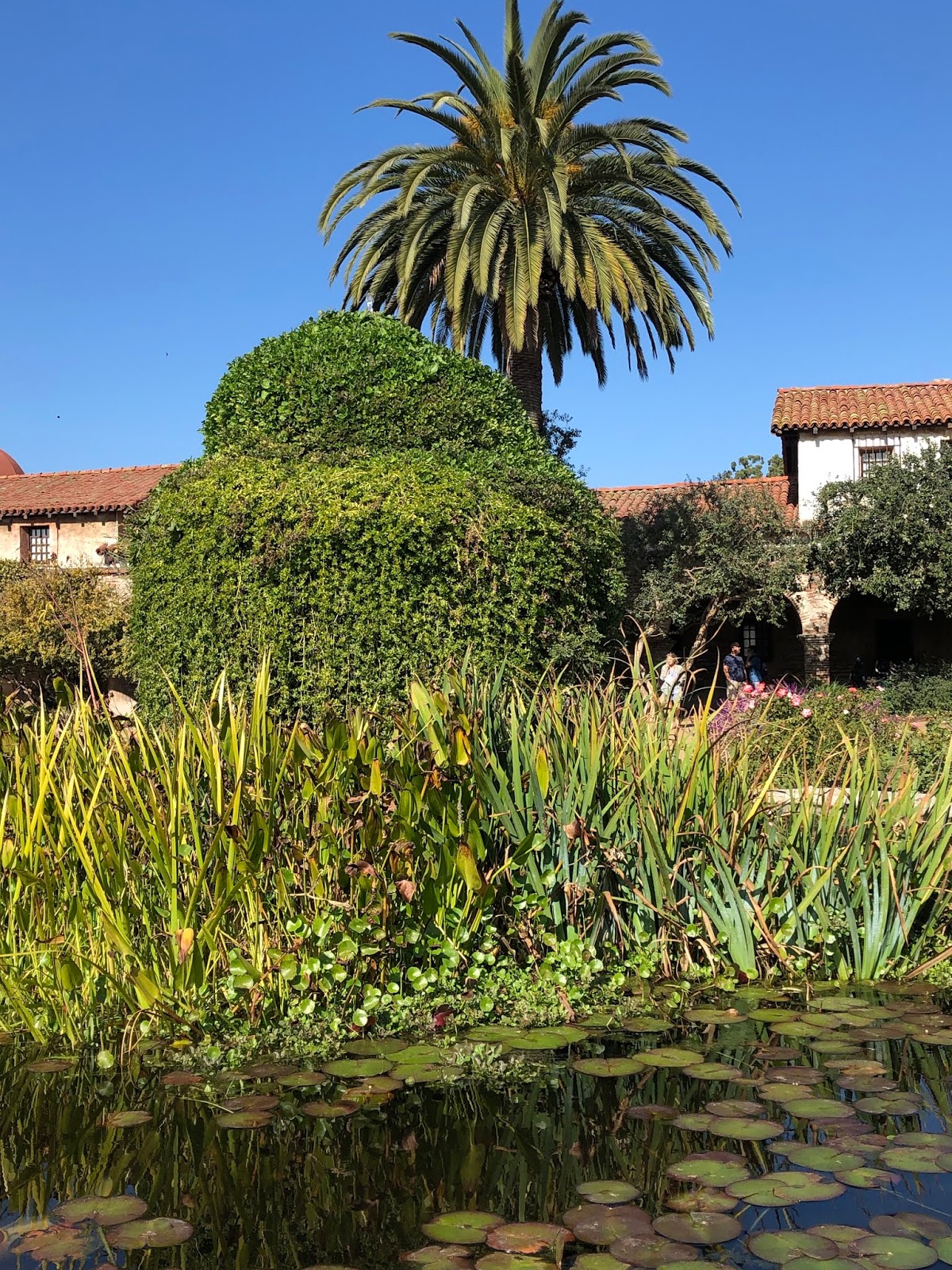
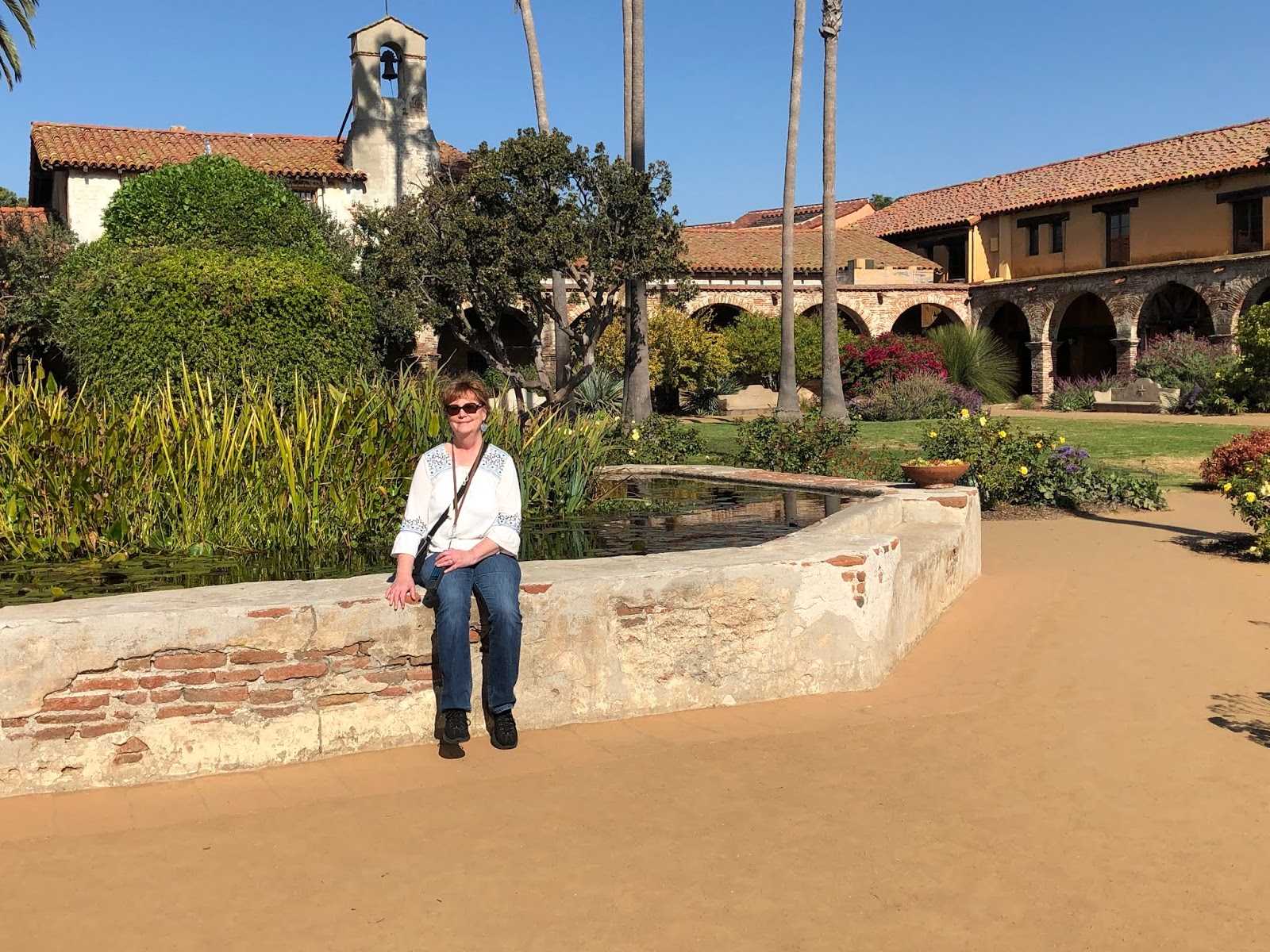
The Inspector and I did a little posing in front of the many beautiful fountains throughout the grounds.

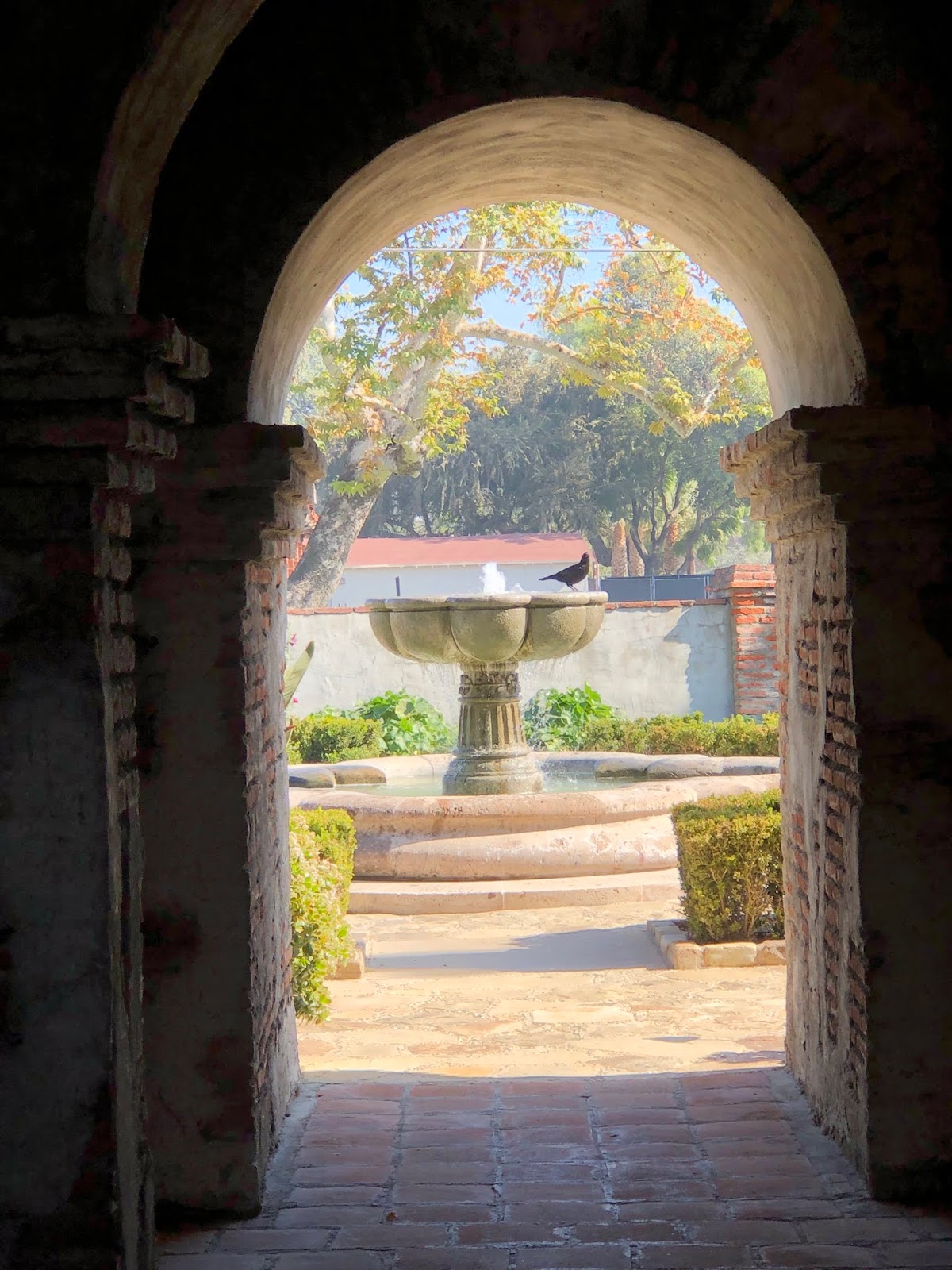
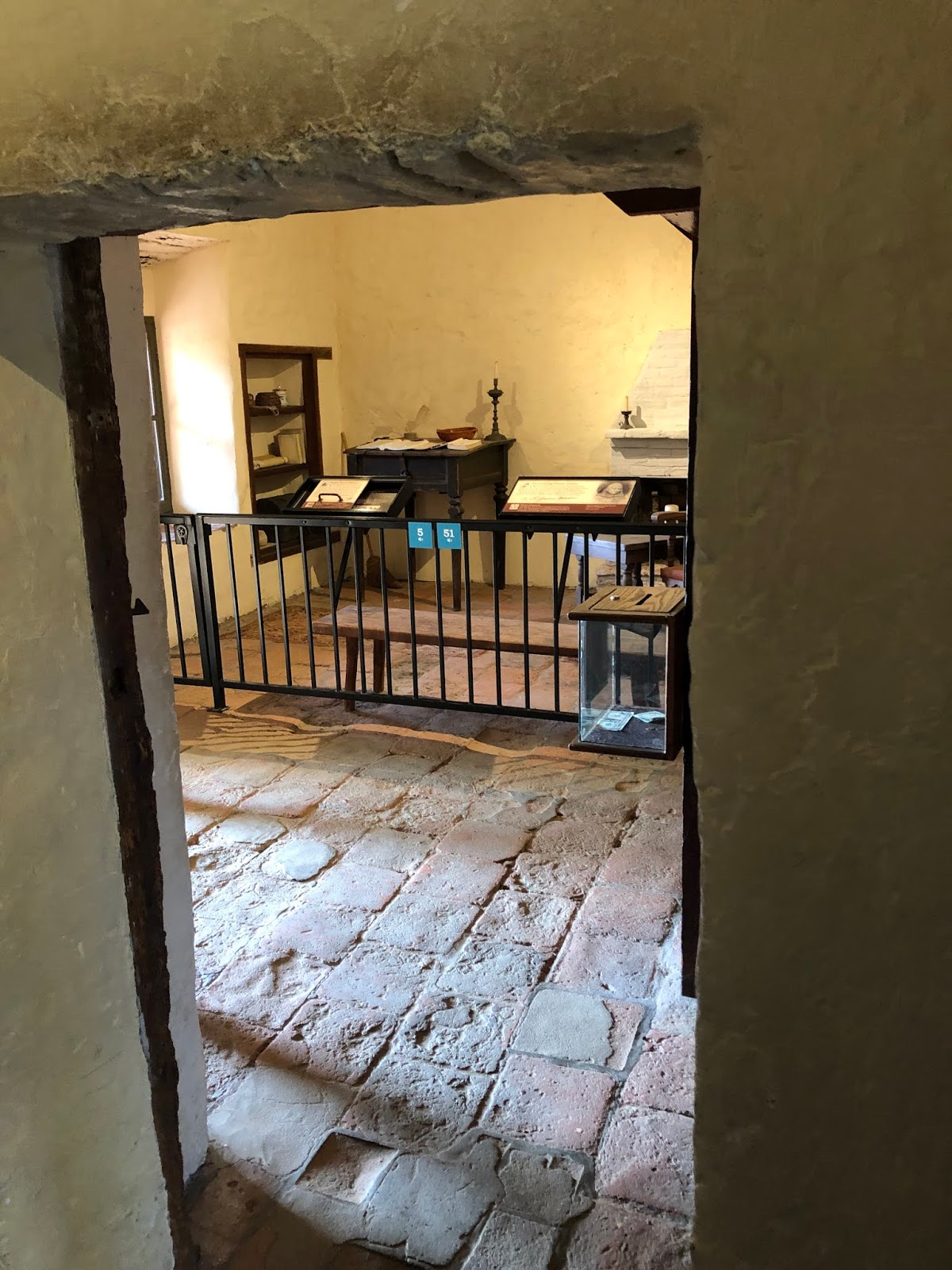
It was interesting to note that while the exterior walkways were high and arched, the interior doorways were so low we had duck our heads to get from room to room.
The walls you see rising in the background are part of the original stone church.

Work began on the "Great Stone Church" in 1797 and was completed in 1806. It was built in the shape of a cross with 50 foot high walls and a 70 foot bell tower. Legends say the tower could be seen for 10 miles. Tragically, on December 8, 1812, just 6 years after the church was completed a massive earthquake struck Southern California and brought the church crashing down. Forty worshipers were crushed in the rubble and the church was never rebuilt. The ruins of the old church still remain.


A bell wall was built between the ruins of the stone church and the original mission chapel to hold the bells which were salvaged from the ruins. The two large bells you now see are reproductions. The two smaller ones are original.

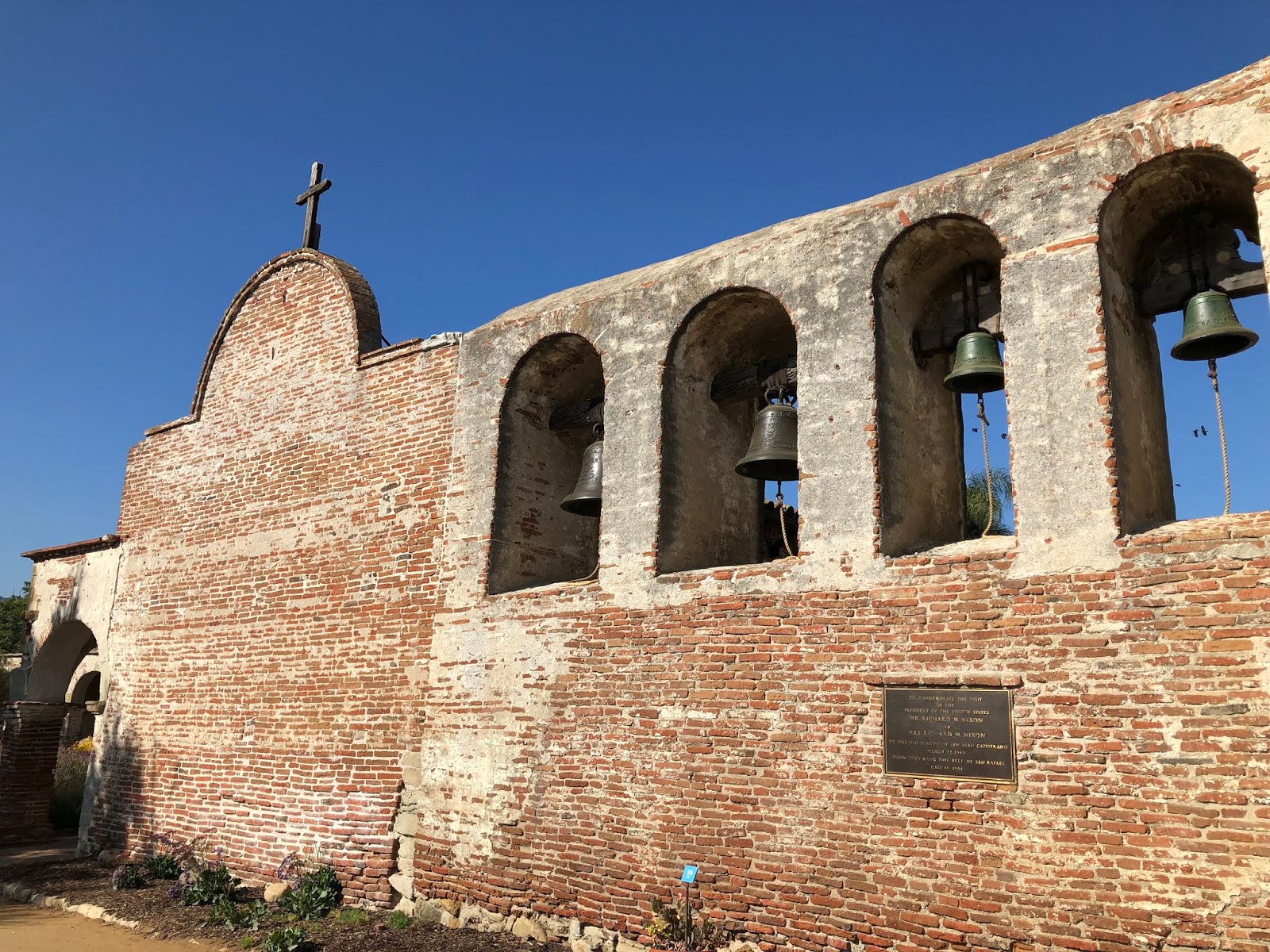

These are the two large original bells.

Inside Father Serra's original chapel. The gold "tableau" was added in the early 20th century when the church was renovated.


Of course, no trip to San Juan Capistrano would be complete without mentioning the swallows. Every year a large festival takes place on St Joseph's Day in March to celebrate the return of the swallows to the mission. After wintering in Argentina the birds will make the 6,000 mile journey back to San Juan Capistrano where they will make their homes in the eaves of the old walls. The swallows had already left for the winter but we could still see the mud nests.

We always enjoy a visit to one of the Californian missions. I hope you enjoyed our little tour. May the Lord richly bless you wherever you are this day. Adieu!


